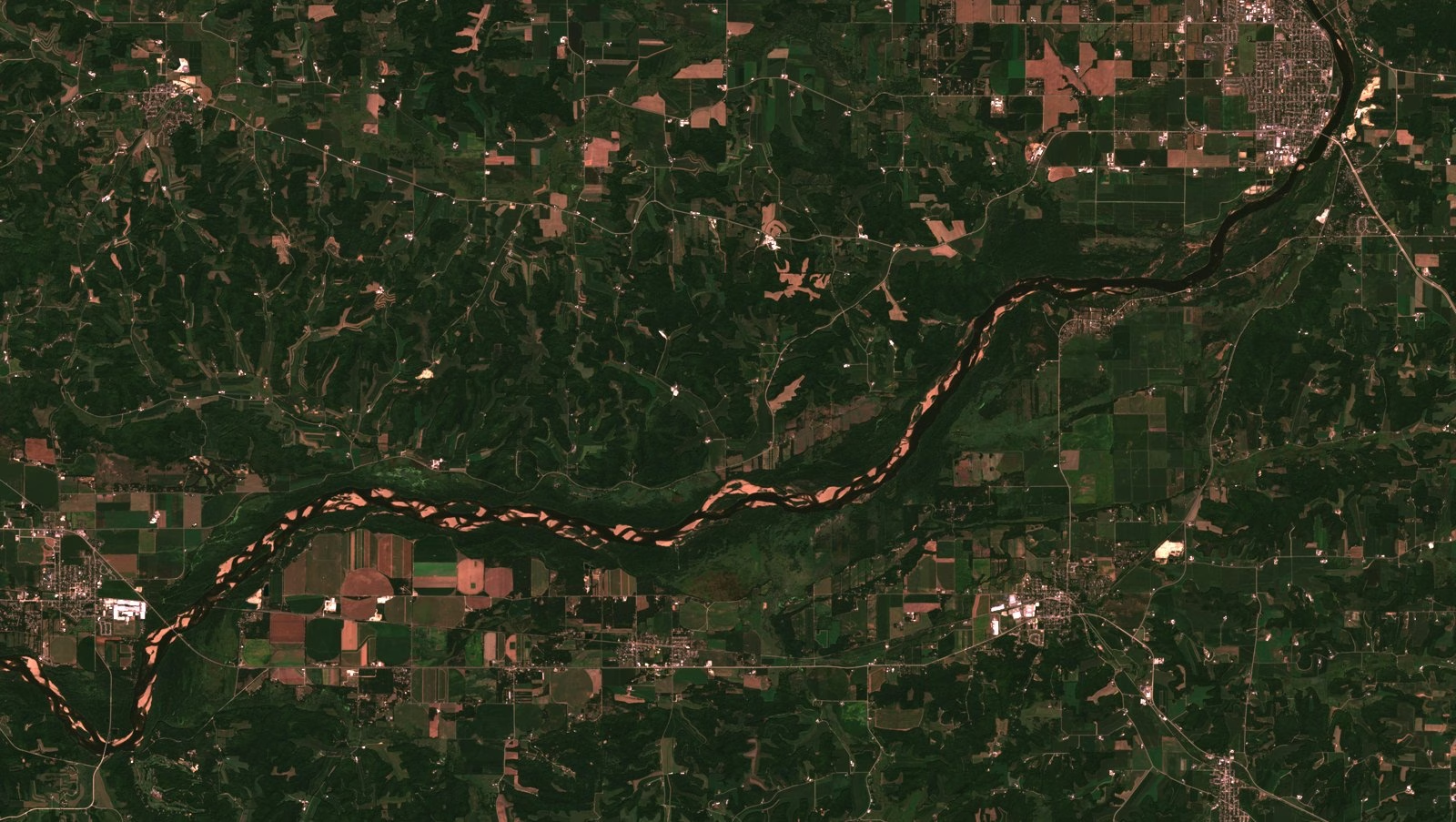
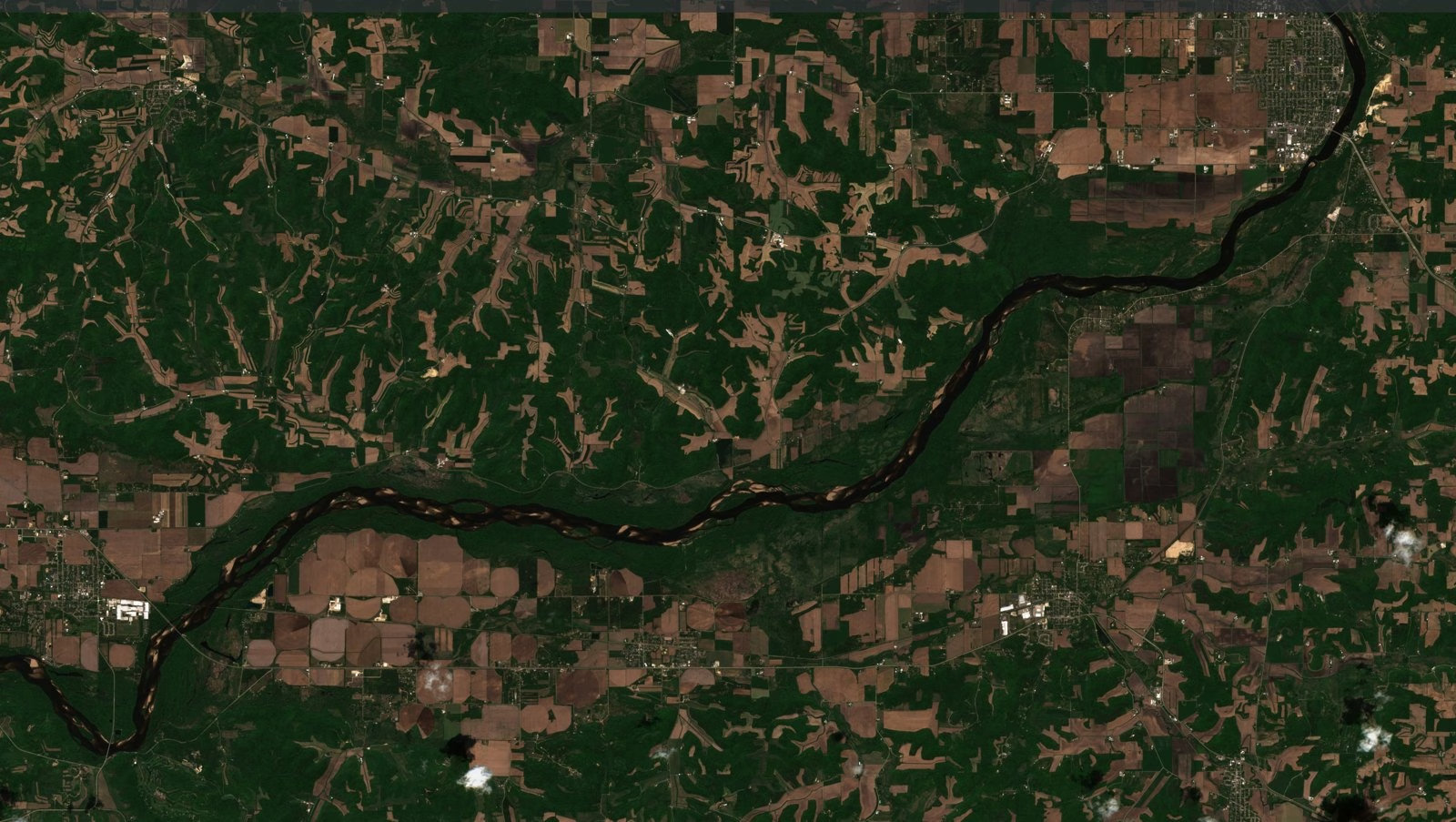
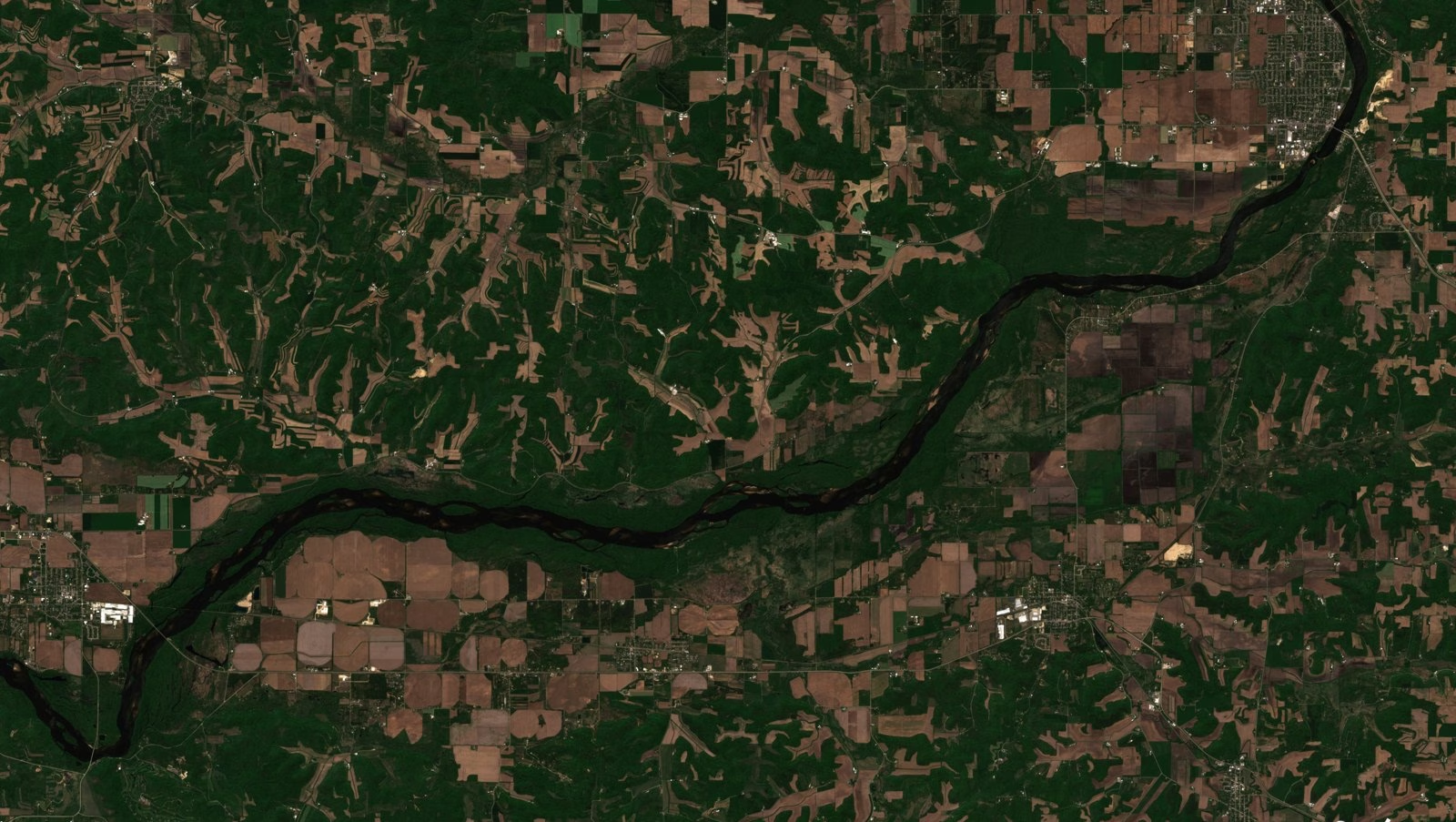
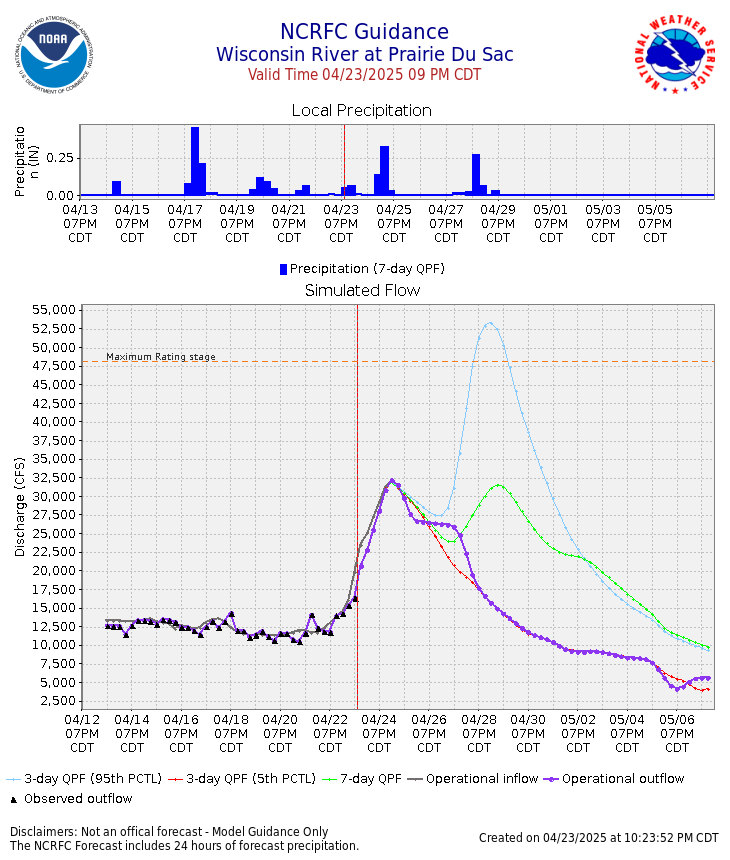
The flow rate (measured in cubic feet per second – cfs) is directly related to river depth. The deeper the river, the exponentially higher the flow rate goes as more volume fills in low lying areas. You’ll often see most data reported as flow rate-CFS rather than water depth.
For people planning to camp out on the river, flow rates above 17,000 cfs (~4.0′ deep) on the Wisconsin River generally result in barely a handful of sandbars above water and camping trips shouldn’t be attempted. Day trips are generally okay up to about 30,000 cfs (~5.5′ deep), at which point it becomes too difficult to find a place to get back in your boat if you’ve capsized. That said, if you know how to hold a paddle and manage your canoe/kayak, high flow rates can be pretty exciting and give you access to a lot of places within the river way that are normally inaccessible.
On the other end of the spectrum, flow rates below 10,000 cfs (~3.0′ deep) will mean plenty of sandbars to choose from and a very gentle current in the range of 2–3 mph. Anything below 5,000 cfs means more sandbars than you’ll know what to do with (but still more than enough water to make it down the river). Because of federally mandated minimum flow rates, it is essentially impossible that you would ever not be able to paddle because of low water.
High water usually works its way through the system in 4–6 days. The higher the water level, the faster it drains out. If we’re above 20,000 cfs with a dry forecast, expect to be able to get back on the river in under a week.
All of our reservations cancelled due to river conditions are refunded in full. If conditions are near or above our limits, you’ll receive a notification from us 2–3 days before your trip with an updated status report. We also try to keep the front page of the website updated daily when things start looking dicey. We’ve crunched the numbers on high water conditions over the past 100 years — check out the historical high water data to see how likely high water will be for your trip.